
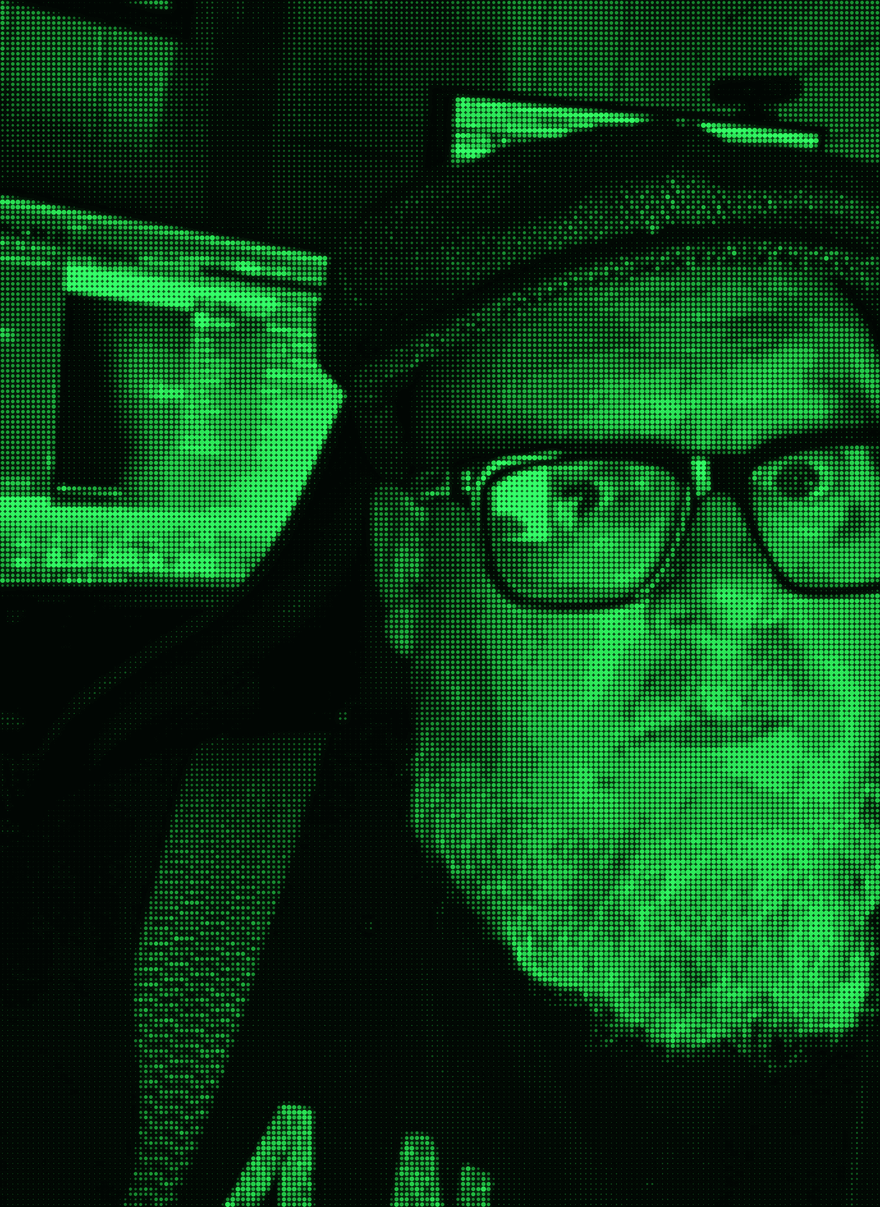
Growing up in the ’80s and ’90s, I have one leg in both worlds, the pure analog reality and the digital revolution. Interested in computers since I was 10, I shoulder-rode my father as he learned BASIC and Pascal. I was amazed at the prompt, and the phosphor green screen, making magical sounds as the floppy spun up loading whatever I could find. Doom, Castle Wolfenstein and Duke Nukem took me. Going online in the mid-’90s, a brave new world presented itself, and by 2001 I heard whispers about Linux. Already then, after two years saving the world from Y2K and billing problems for Tele2 customer service, I was tired of Windows. Thus began the Linux and Unix journey.
I wouldn’t call myself an expert, but I’ve lived with the CLI and the Linux tools for 25 years now, so I’m quite at ease with that part of the IT world. Needing help, as many others, I ended up on IRC channels, learning and growing while borking my system numerous times. When I knew better, I helped out in the open source support community and was a host for offtopic social channels surrounding Debian and Ubuntu. I watched tools such as inxi and smxi get developed, helped with testing and documentation in some cases, even Norwegian translations for certain software.
Hitting a wall of health issues, I went dark a few years, worked myself back, graduated with a higher vocational degree in Network and IT Security (NIS) at Noroff vocational school and am now pursuing my bachelor’s in DASM. Been through a fair bit of networking with CCNA and Noroff training, also programming, databases, ethical hacking, forensics. I’m building a broad toolset, and I want it even broader, as I seek to study moral philosophy, ethics and history, to put all this technical knowledge into a modern point of view on IT, AI, ethics and history.
This site is a moving target, but it reflects both my studies and my personal pursuit of knowledge. I work in tandem with AI, with focus on quality control and administration of agents. My site offers my point of view on tech, cyber and geopolitics, as these often intertwine.
If you like what I do, share the site, comment on the site’s socials, and if you would like to support, hit the Buy Me a Coffee at the bottom of the page.
— mr0
The platform
This is an independent research and media platform. No ads. No sponsors. No investors. What you read here is funded by consulting work and the people who find it worth reading.
We cover cybersecurity, surveillance, digital rights, and the friction between technology and human life. When something is important and underreported, we write about it. When something is technically complex, we try to make it legible without making it dumb.
The investigations are real. The sources are cited. The opinions are ours.
We are not affiliated with any government, vendor, or security firm. We don’t accept sponsored content. We don’t do affiliate links. If something is worth your attention, we’ll say why… and if it isn’t, we won’t waste your time.
Beyond the research, we publish essays and video work exploring technology, identity, and the human condition at mr0zum on Substack and YouTube. If the work means something to you, the best way to support it is simple: subscribe, like, and share.
ftrcrp.org has been publishing since 2025.
On AI tools
AI tools are part of how the work gets made. Signals, investigations, analysis, opinion, and guides are AI-assisted with a human in the loop; drafts are reviewed and signed off by a named natural person before publication. The Security Digest is a fully automated weekly pipeline that fetches, summarises, and drafts each issue end-to-end, with light-touch human gating on publication. Every article carries a disclosure block at the foot stating which mode applies and pointing at the AI transparency notice for the full policy. Editorial responsibility rests with Thomas A. Kleppestø as a named natural person.